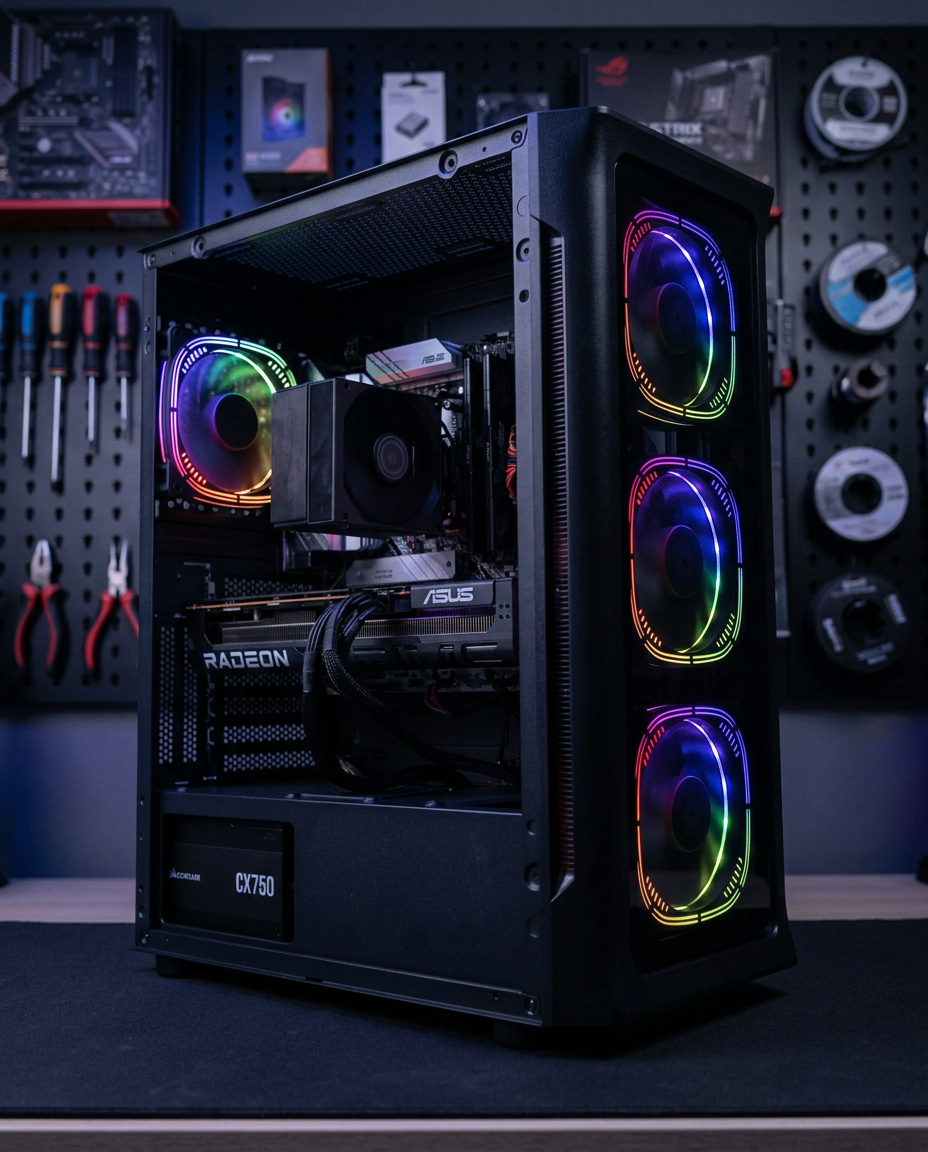
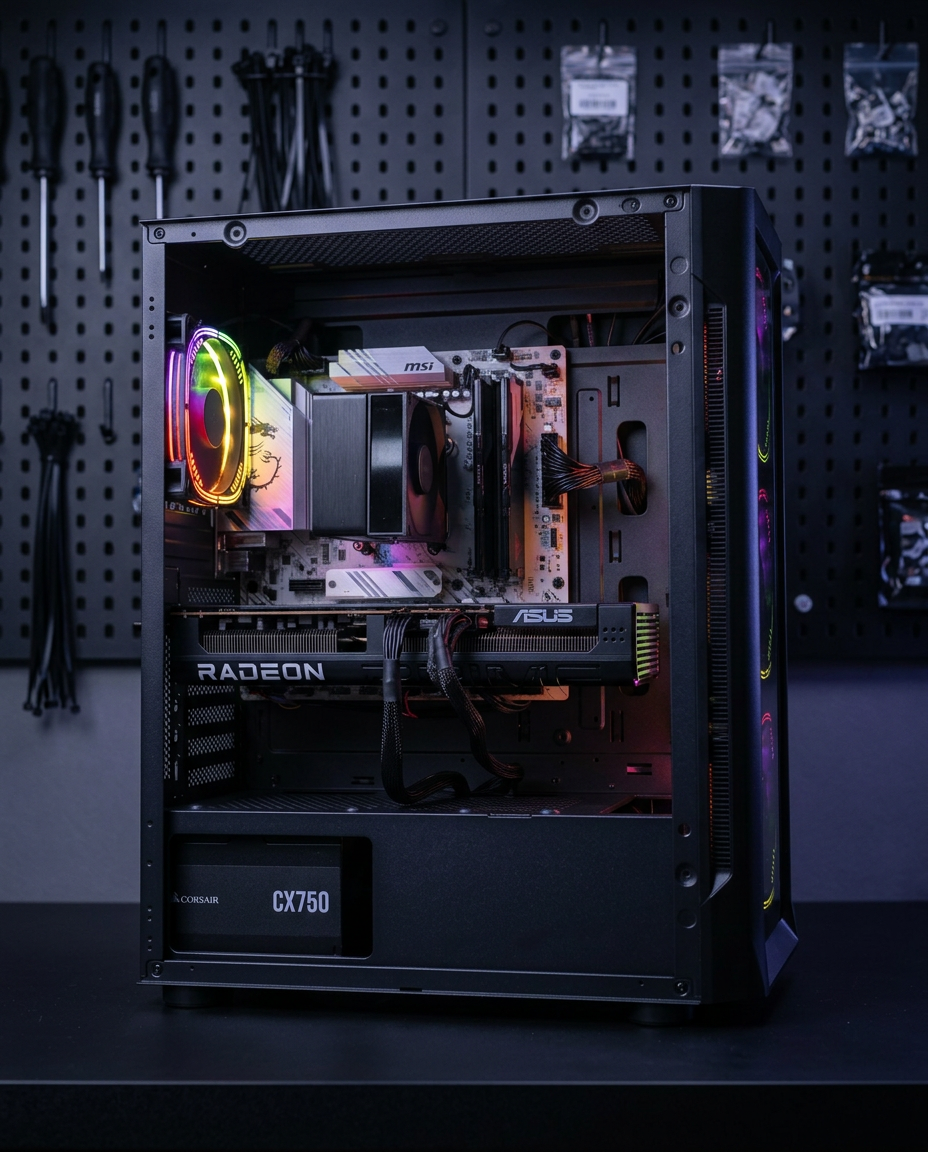
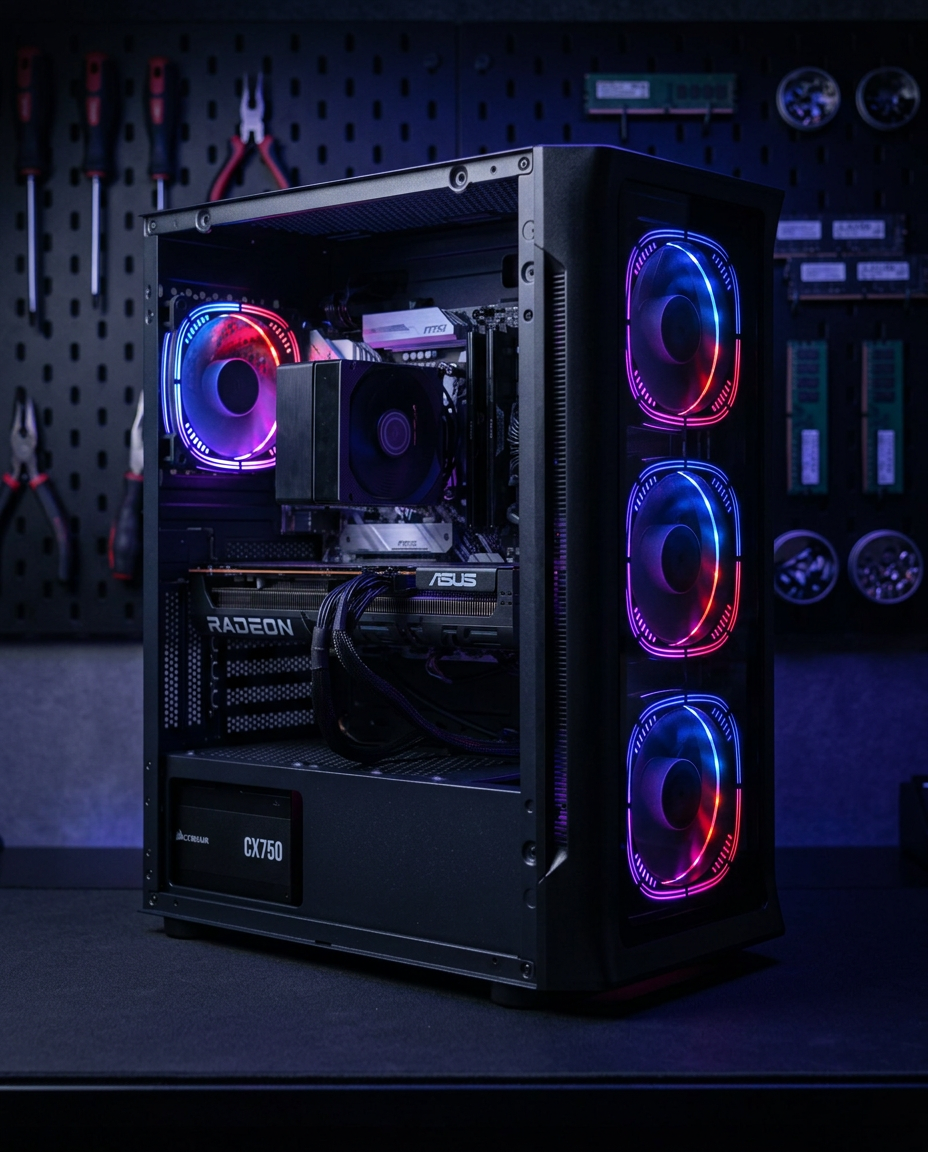
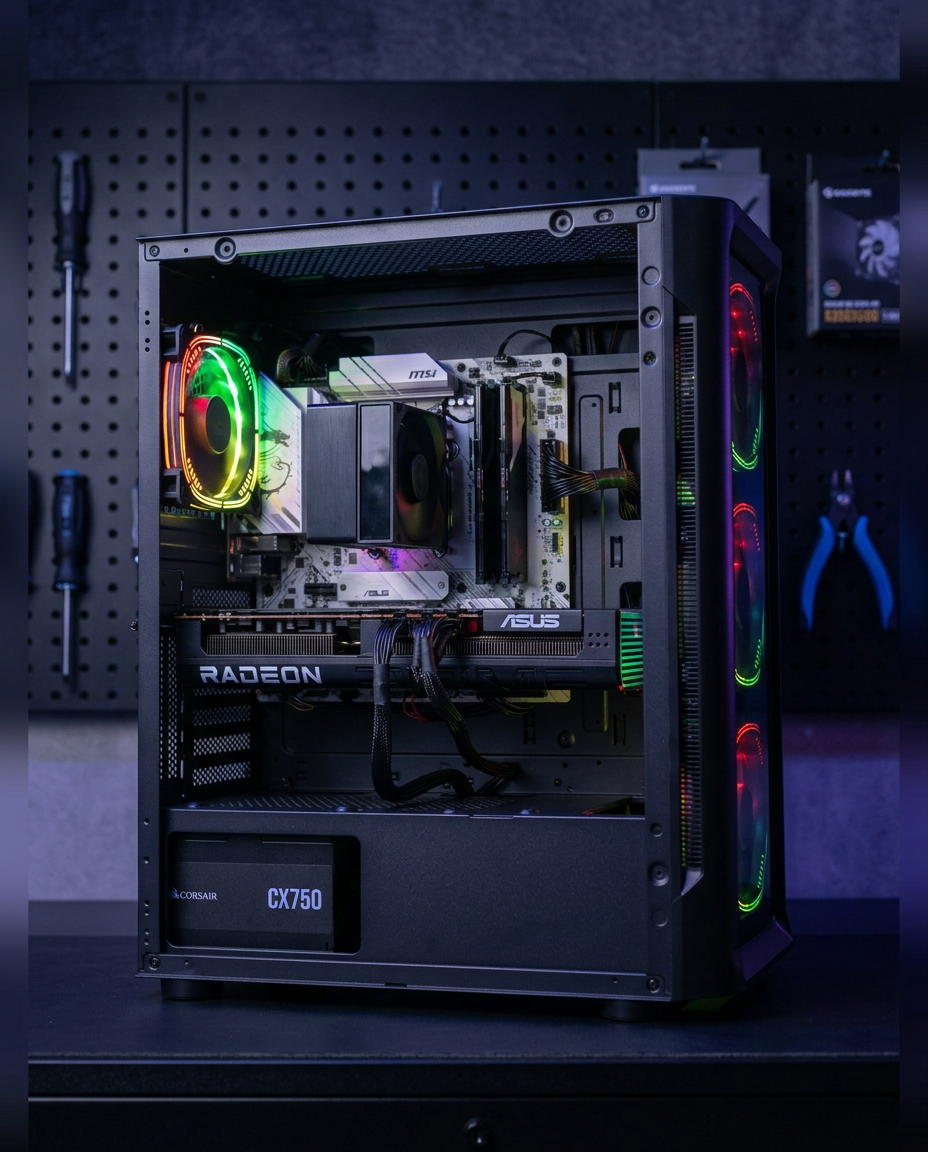
What's inside this custom build
AMD Ryzen 7 7800X3D — €396. Eight cores, 96MB of 3D V-Cache, and the best 1% lows in gaming you'll find anywhere. I could've saved €150 with a 7600X, but the 7800X3D pulls ahead in CPU-bound titles like Baldur's Gate 3 and *Total War*, and it'll age better. No regrets.
Sapphire PULSE RX 9070 XT 16GB — €1,091. AMD's new RDNA 4 card, 16GB VRAM, dual HDMI and dual DisplayPort. It slots between the old 7800 XT and 7900 GRE in raster, but FSR 3.1 frame-gen and better efficiency make it a smarter pick for 1440p ultra and 4K high. Sapphire's cooler runs quiet, and the extra VRAM headroom matters if you're modding Cyberpunk or holding textures at ultra in *Forza*.
Patriot Viper Venom 32GB DDR5-6000 — €598. Ryzen 7000 loves 6000MHz RAM—it's the sweet spot for Infinity Fabric. Dual-channel, low-latency, and 32GB means you can leave Chrome open, run Discord, and still have overhead for streaming or video editing between sessions.
Crucial P310 1TB Gen4 NVMe — €201. Up to 7,100MB/s read. DirectStorage-ready, fast enough that game load times disappear. 1TB fills up fast with modern AAA installs, but it's easy to add a second M.2 or SATA SSD down the line.
MSI B850 Gaming Plus WIFI6E — €174. ATX board, WiFi 6E built-in, PCIe 5.0 slot, and USB-C front header. Stable VRMs for the 7800X3D, and MSI's BIOS is straightforward if you want to enable EXPO or tweak fan curves.
Corsair CX750 750W 80+ Bronze — €100. The 7800X3D sips power, the 9070 XT peaks around 260W. 750W leaves overhead, runs efficient, and Corsair's CX series is reliable.
Mars Gaming MCPU-XPRO cooler — €20. Three heatpipes, 190W TDP rating. The 7800X3D doesn't run hot, and this keeps it under 75°C during stress tests. Quiet, cheap, does the job.
Mars Gaming MC-SE2 case — €42. MicroATX, frameless tempered glass front and side, good airflow. Budget case, but it looks clean and doesn't choke the GPU.
Sapphire's dual-fan cooler and clean cable routing
Tempered glass side panel—minimal RGB, maximum visibility